Course Information
Keep the risk of infection low—every day, on every voyage
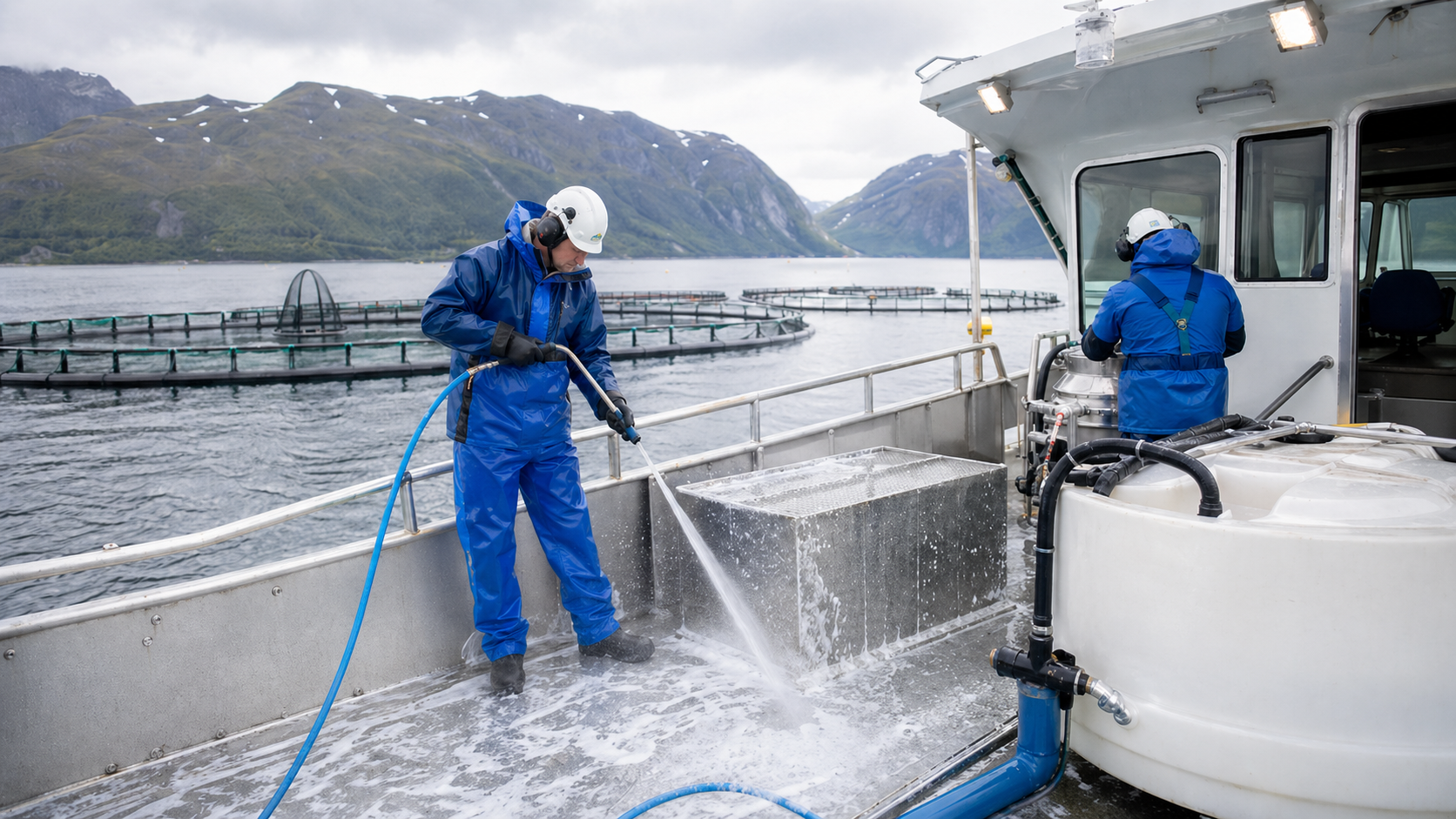
This course provides a practical introduction to biosecurity in aquaculture, with a focus on the operation of well boats and service boats. You’ll learn how behavior, route selection, zones, water management, washing, and disinfection affect the risk of infection.
• Specific measures for equipment, vessels, and clothing
• Documentation and self-monitoring (including ATP measurements)
• Measures in the event of an outbreak: isolation, quarantine, and decontamination
The following lessons are offered in this course
1. What is Biosecurity?
2. Information on Biosecurity
3. Regulations and Requirements
4. Routes of Transmission in Aquaculture
5. Fallowing, Isolation, and Sanitation
6. Spread of Infection in Different Types of Operations
7. Risk Assessment and Biosecurity Measures
8. Good Biosecurity Practices
9. Washing Is Most Important
10. Disinfection Is the Icing on the Cake
11. Self-inspection and ATP measurements
Who is this course for?
This course is intended for employees working on wellboats, service vessels, or in other operations within the aquaculture industry where the risk of infection must be managed in practice. It is particularly relevant for crew members, operational staff, managers, and others who plan, carry out, or follow up on assignments across different locations. The course is suitable for anyone who wants to strengthen their understanding of biosecurity, best practices for cleaning and disinfection, self-monitoring, and measures that help keep the risk of infection low in everyday operations.
Developed by HaVet Fiskehelse
The course was developed in collaboration with HaVet Fiskehelse. HaVet Fiskehelse possesses specialized veterinary expertise in fish health, fish welfare, and infection prevention. The company provides services to stakeholders in the smolt, food fish, cleaner fish, and cultured fish sectors, and also contributes its technical expertise to various organizations and stakeholders in the aquaculture industry.