



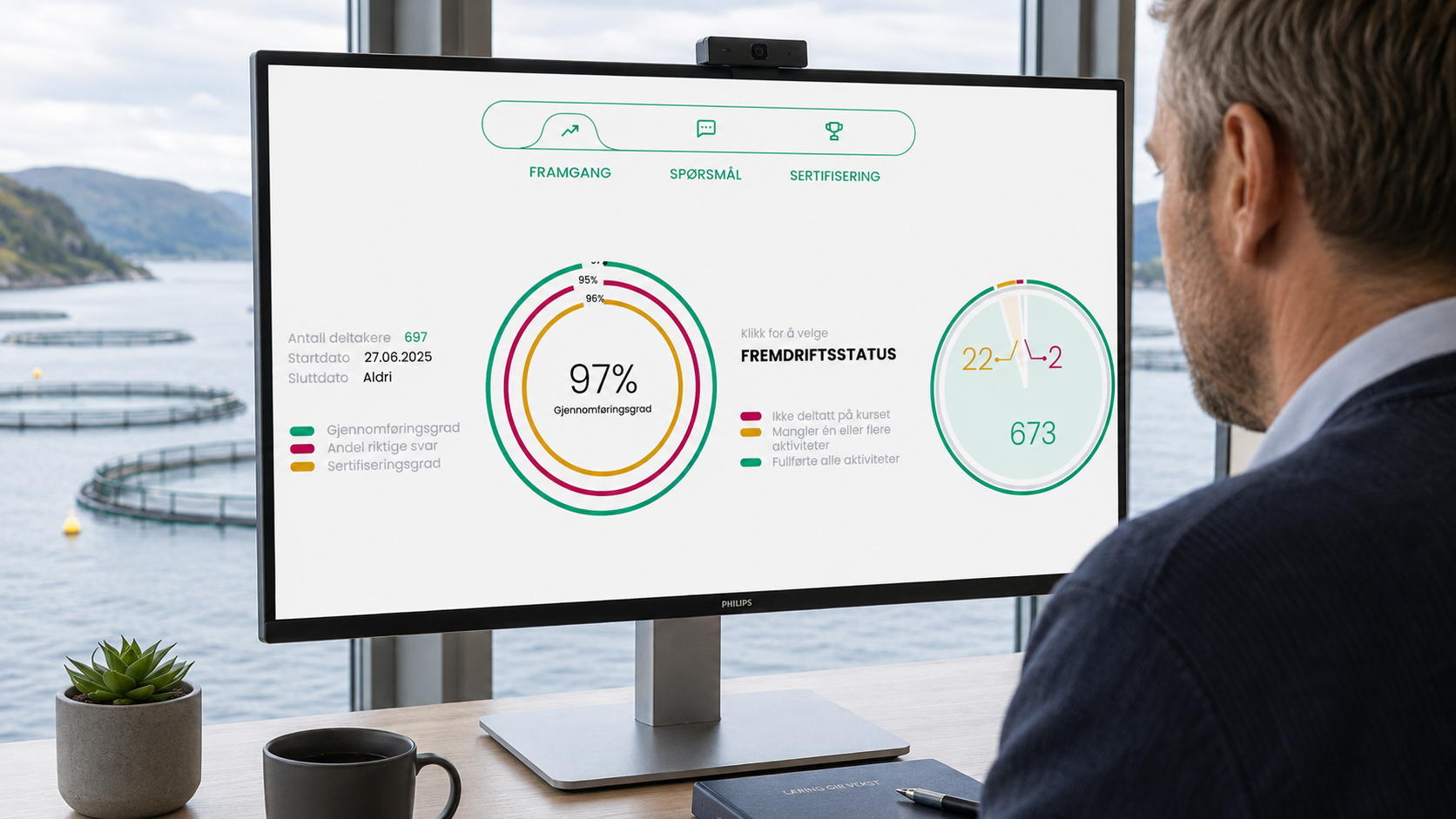
Based on data from over 1.2 million employees and 50 million lessons
XtraMile has provided training to over 1.2 million employees, who have completed 50 million lessons. This experience provides a very clear picture of what works and what doesn’t—and one thing is certain: completion rates and learning outcomes depend not only on the content, but also on how the training is planned, structured, and followed up. Here’s what we know for certain.
What we know works.
When we look across all these training pathways, the patterns are clear. What distinguishes companies with high completion rates from those with low ones is rarely about the course content alone—it’s about structure, automation, and leadership involvement.
1)
Make it easy for employees to get started
Training that requires logging in, navigating, or technical effort loses participants before they’ve even started. One-click access to the course isn’t just a convenience—it’s a prerequisite for high completion rates.
“It was very easy for the employees. With us, people just click to log in—and then they’re off to a good start. It’s been important to us that this is a low-barrier offering.”
— René Lares, Uno-X
“For us, simplicity is the most important thing. Volunteers have hectic daily lives, and the training must be adapted to their schedules.”
— Ragnhild Grøv, Norwegian Hunting and Fishing Association
2)
Break the training down into short, sequential lessons
Long course modules sent out all at once compete with employees’ other priorities—and usually lose out. Short lessons spread out over time lower the barrier to completion and increase the likelihood that the content will actually stick.
Uno-X structured its IT security training exactly this way—frequent, short lessons rather than a single heavy module—and saw completion rates rise from 50% to 100%.
“With XtraMile, we can run everything from phishing tests to training in small 3–5-minute chunks. That’s short enough that no one can say they don’t have time.”
— René Lares, Uno-X
3)
Automate reminders
Employees are busy, and training is easily deprioritized in a hectic workday. Automated reminders ensure completion without requiring manual follow-up from managers or HR—and they don’t feel like a nuisance when done right.
4)
Empower managers
Managers who have an overview of their team’s progress and access to specific follow-up suggestions help foster shared responsibility for completion. Training that relies solely on HR is more likely to be deprioritized. XtraMile’s manager activation feature makes it easy for managers to follow up—without taking up too much time.
5)
Treat training as an ongoing process, not an annual event
Knowledge that isn’t reviewed is forgotten. Effective training builds awareness over time—not through a single course, but through regular, relevant lessons. At Uno-X, the results are tangible: the percentage of compromised users dropped from 20–30% to 0%, and employees now spontaneously report suspicious emails to the IT department.
Some Common Pitfalls
The most common mistakes we see aren’t technical. They stem from assumptions—that employees will take action on their own, that a single email is enough, or that managers have the capacity to follow up on their own.
1)
Don’t send everything out at once
A Scandinavian company achieved a completion rate of over 70% across all the countries where it operated one year, using sequential mailings. The following year, the marketing department chose to bundle everything into a single coordinated launch—without follow-up reminders. The reasoning was that they didn’t want to be pushy. The result was a drastic drop to just an 8% completion rate.
2)
Don’t assume that employees will complete tasks on their own initiative
In 2024, a large municipal organization had a completion rate of 59% with over 3,000 completions. In 2025, they opted for a simpler campaign with fewer follow-up points. The result: a 23% completion rate and only 25 completions. The content was identical. What was missing was the structure surrounding it: no sequential reminders, no manager involvement, and no automated follow-up.
3)
Don’t leave follow-up to managers to handle manually
Managers rarely have the capacity to keep track of who has completed the program and who hasn’t. In both of the cases above, the managers had good intentions—but without the right tools and automation, follow-up falls by the wayside anyway.
Conclusion
Good results don’t happen by chance. What distinguishes organizations with high completion rates from those with low ones is rarely the content—it’s the structure surrounding it. The right structure doesn’t necessarily require more resources, but it does require deliberate choices from the start.
• Break down the training into short lessons and roll them out sequentially over time
• Automate reminders—employees need structure, not voluntary participation
• Make access simple enough that a single click is all it takes
• Empower managers with an overview and specific follow-up suggestions
• Treat training as an ongoing process, not an annual event
About XtraMile
XtraMile is designed to ensure exactly that—the right structure, automated follow-up, and easy access for all employees. That’s why over 1.2 million employees have completed training on the platform. Contact us for a demo.